BTS – IDOL Official MV | Powerful Self-Love Anthem is the 2018 music video that serves as the title track of BTS’s compilation album Love Yourself: Answer, blending high-energy dance, traditional Korean imagery, and a defiant message of self-acceptance under the banner “I love you, see, I love myself, say.” As of 2026, the video remains one of the most culturally and commercially significant K-pop releases in history, with over 1 billion YouTube views and a lasting influence on global discussions about identity, self-worth, and the role of pop culture in mental health and social progress
.
Context: IDOL and the Love Yourself Trilogy
“IDOL” was released on August 24, 2018 as the first single from Love Yourself: Answer, the third and final album in BTS’s Love Yourself series. The series’ overarching theme is the search for true love, which is ultimately realized as self-love in this final installment. The song and video are explicitly designed to celebrate the group’s identity, career, and place in the world, declaring that listeners can be proud of themselves regardless of external judgment or industry pressure.
The track is described as a hybrid of electronic dance music (EDM), trap, and traditional Korean elements, with lyrics that openly reject the idea that BTS must conform to Western expectations or dilute their cultural identity to succeed globally. Leader RM and the group’s production team embedded references to Korean folklore, traditional clothing, and earlier BTS choreographies, signaling both artistic maturity and a deep connection to their roots.
Visual and Narrative Structure of the IDOL MV
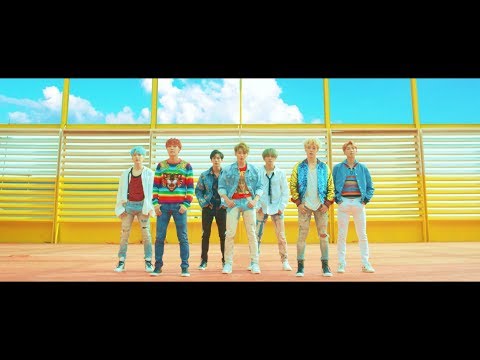
The official music video, directed by YongSeok Choi of LUMPENS, is visually explosive, using a kaleidoscope of colors, patterns, and symbols to create a sense of controlled chaos:
The members appear in vibrant, oversized outfits that mix modern streetwear with traditional Korean garments like the Durumagi (a long coat from the Hanbok).
Scenes include a rabbit inside a moon, referencing the Korean folk symbol of the “moon rabbit,” and a tiger that appears briefly, symbolizing transformation and maturity (in Korean folklore, a tiger that faces its challenges becomes a white tiger).
The choreography deliberately reenacts movements from earlier BTS songs, such as “Go Go,” “Not Today,” and “Dope,” connecting the group’s past to their current identity and showing growth over time.
The video’s final moments feature the members forming the letters “ARMY” with their bodies, a direct tribute to their fanbase and a statement that their identity is not just personal but also collective.
The video’s aesthetic is intentionally “wild” and “k-pop maximalist,” countering accusations that BTS was becoming too Westernized by embracing an ultra-Korean visual language while maintaining global appeal.
Extremely Positive Perspectives: Cultural, Social, and Industry Impact
A Defining Statement on Self-Love and Identity
From a highly positive perspective, “IDOL Official MV” is widely regarded as one of the most powerful self-love anthems in global pop music. The repeated mantra “I love myself say” and the defiant declaration “No matter what you say, I love myself, say” invert the traditional idol narrative, where artists are often seen as passive objects shaped by industry and fans. Instead, BTS position themselves as active agents who define their own worth and identity, encouraging fans to do the same.
Psychologists, educators, and mental health advocates have cited BTS’s Love Yourself series and “IDOL” as valuable tools for discussions about self-acceptance, resilience, and the importance of positive self-talk. The video’s message has been integrated into youth programs, school workshops, and mental health campaigns, helping to normalize conversations about mental well-being and self-worth among teenagers and young adults.
Celebration of Korean Culture and Global Representation
From a cultural and diplomatic standpoint, “IDOL” is seen as a landmark in how K-pop can represent Korean identity on a global stage. The video’s use of traditional Korean garments, folk symbols (moon rabbit, tiger), and choreographic references to BTS’s earlier work demonstrates a commitment to cultural authenticity rather than mere imitation of Western trends.
Critics and media analysts have noted that “IDOL” helped shift perceptions of K-pop from a niche genre to a major force in global pop culture, proving that non-Western artists could achieve massive success without sacrificing their cultural identity. The song and video contributed to South Korea’s soft power, enhancing its image as a modern, innovative, and culturally rich nation, and inspiring other Asian artists to pursue global releases while maintaining their own cultural markers.
Industry Influence and Fan Empowerment
From an industry and fan economy perspective, “IDOL” demonstrated:
The power of a dedicated fanbase (ARMY) to drive record-breaking performance, with the video achieving over 45 million views in its first 24 hours, breaking the YouTube record at that time.
The ability of BTS to blend high-concept artistry with commercial success, setting a new benchmark for what a K-pop release could achieve in terms of views, streams, and cultural impact.
The role of fan communities in shaping narratives around identity and self-love, with ARMY organizing campaigns, discussions, and events centered on the Love Yourself message.
The song and video’s success reinforced BTS’s position as one of the most influential groups in the music industry, contributing to the growth of related industries such as fashion, merchandise, digital platforms, and live events, and demonstrating the economic potential of a global, culturally hybrid artist.
Extremely Negative Perspectives: Criticisms and Limitations
Commercialization of Self-Love and Mental Health Messaging
From a sharply critical angle, some observers argue that “IDOL” transforms the concept of self-love into a marketable product, part of a larger campaign that sells emotional well-being as a consumer experience. The repeated “I love myself” mantra can be seen as a slogan that is easy to repeat but difficult to implement in real life, especially for young people facing systemic pressures, social inequality, or mental health challenges.
Critics may say that the video’s message, while empowering, risks oversimplifying the complexity of self-love and mental health, reducing them to catchy phrases that can be packaged and sold. In this sense, “IDOL” can be interpreted as a commercialized version of empowerment that prioritizes brand image over deeper, more nuanced engagement with mental health issues.
Reinforcement of Idol Culture and Industry Pressure
Another negative critique focuses on the fact that “IDOL” is itself a product of the idol industry, which has been criticized for its intense training systems, strict control over artists’ lives, and the pressure placed on young performers to maintain idealized images. The song’s defiant message of “I love myself, say” can be seen as ironic, given that BTS’s identity is still shaped by corporate decisions, fan expectations, and industry demands.
Critics argue that the video’s celebration of BTS’s journey may mask the structural problems that many idols face, such as lack of autonomy, mental strain, and the constant need to perform. In this view, “IDOL” is both a critique of the idol system and a product of it, revealing the tension between artistic expression and commercial reality.
Limits of Representation and Global Recognition
On a broader level, some observers note that despite “IDOL”’s massive success, BTS and other K-pop artists continue to face barriers in receiving formal recognition from major Western institutions, such as the GRAMMYs. The song’s cultural impact does not necessarily translate into equal institutional power, reflecting the ongoing limits of global recognition for non-Western artists.
Critics argue that the music industry’s recognition structures still favor established Western artists and that BTS’s commercial dominance does not guarantee equitable treatment. In this sense, “IDOL” is both a triumph and a reminder of the ongoing struggle for respect and recognition in the global music industry.
Real Contribution Across Different Sectors
Music and Entertainment Industry
In the music and entertainment sector, “IDOL Official MV” contributed to:
Setting new benchmarks for digital music consumption, YouTube premieres, and global chart performance.
Demonstrating that non-English-language artists can dominate mainstream Western platforms, encouraging other global artists to pursue international releases.
Driving growth in digital platforms (YouTube, Spotify, TikTok) and related industries such as fashion, merchandise, and live events.
The video’s sustained view count and continued discussion in media and fan communities confirm its ongoing cultural and economic relevance.
Cultural Diplomacy and Global Representation
For cultural diplomacy and global representation, “IDOL” has:
Reinforced BTS’s role as cultural ambassadors for South Korea, contributing to the country’s soft power and international image.
Encouraged discussions about Asian identity, cultural pride, and the value of non-Western art in mainstream global culture.
Inspired other Asian artists to pursue global releases while maintaining their cultural markers, contributing to a broader shift in how K-pop and Asian pop are perceived internationally.
The song and video’s success helped reshape perceptions of K-pop from a niche genre to a major force in global pop culture, enhancing South Korea’s reputation as a modern, innovative, and culturally rich nation.
Education, Mental Health, and Social Progress
In education and social contexts, “IDOL” has been used as:
A cultural reference for discussions about self-love, identity, and the importance of positive self-talk.
A motivational example for young people, especially Asian and Asian-American audiences, to embrace their cultural background and pursue their ambitions.
A tool for educators, counselors, and mental health advocates to connect with students who feel marginalized or underrepresented in traditional media.
While not a direct policy intervention, the song and video support broader efforts to promote inclusivity, cross-cultural understanding, and the value of global art in shaping social progress.
Conclusion: A Dual Legacy of Empowerment and Complexity
“BTS – IDOL Official MV | Powerful Self-Love Anthem” is, at its core, a visually explosive, culturally rich, and emotionally resonant work that reaffirms BTS as global icons and K-pop as a central force in the music industry. Its most positive legacy lies in how it championed self-love, celebrated Korean identity, and inspired diverse audiences to embrace their own worth. Its most negative legacy lies in the risks of commercializing mental health messaging, reinforcing idol culture pressures, and the ongoing limits of institutional recognition for non-Western artists.
Ultimately, the real contribution of “IDOL” is not just as a hit song or a viral video, but as a cultural artifact that continues to shape how fans, critics, educators, and industry stakeholders think about identity, self-worth, and the future of global pop culture in the 2020s. Its enduring view count, cultural impact, and critical analysis confirm that it remains a powerful, complex, and deeply relevant work in contemporary pop culture.